Diet & nutrition
Keep a record of meals and daily nutrition.
Eating well after your transplant
Food choices for recovery, everyday meals, and dining out. Your transplant dietitian’s plan comes first: salt, protein, potassium, phosphorus, fluids, and blood sugar needs are individual.
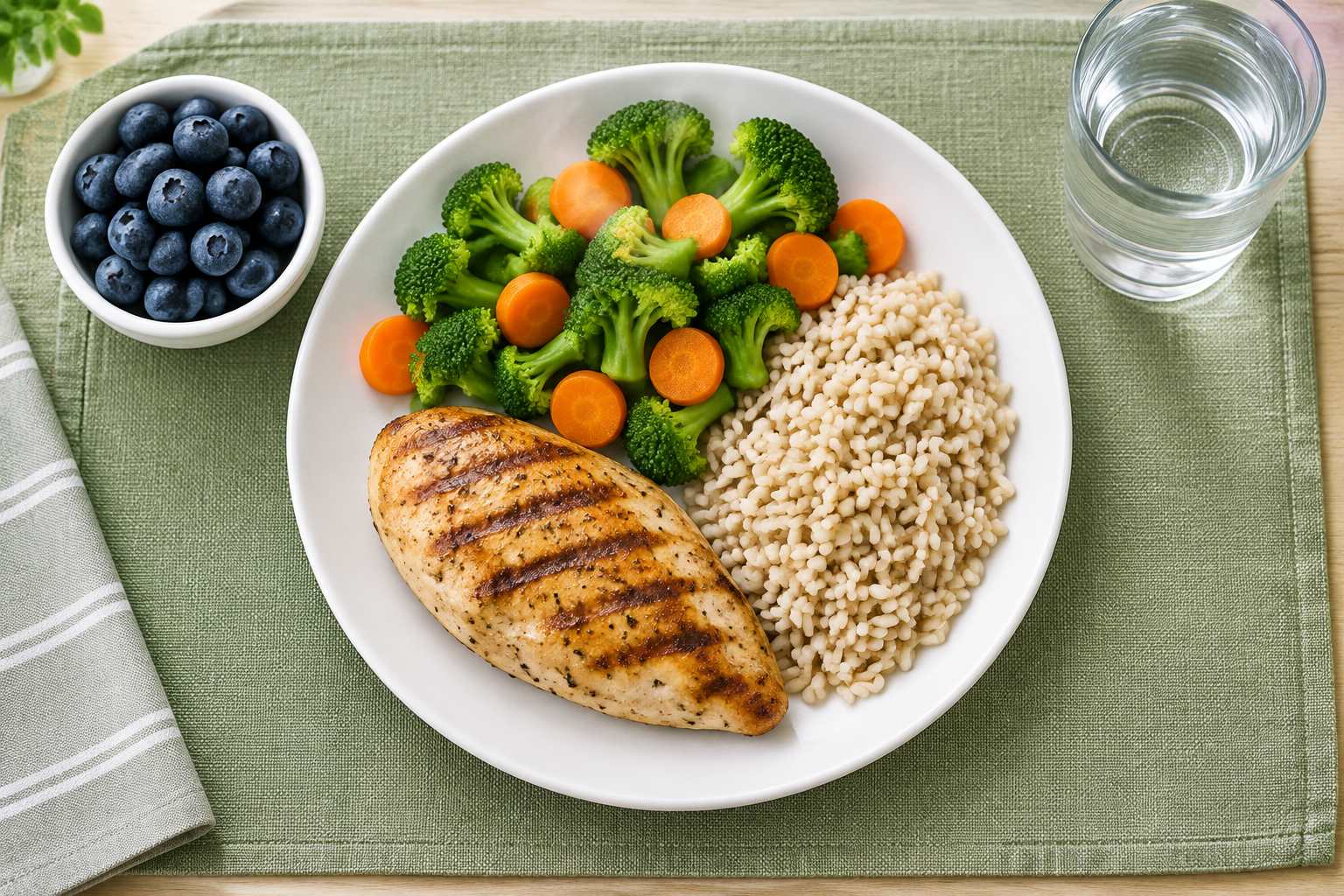
Lean, fully cooked protein
Chicken, turkey, fish, eggs cooked until firm, or cooked beans.
Your protein needs may change during recovery. Ask your dietitian about portions.
Fruit & vegetables
Washed berries, apples, and freshly cooked vegetables.
Potassium limits depend on your blood tests. A transplant diet is not automatically a low-potassium diet.
Whole grains & fiber
Oatmeal, brown rice, and whole-grain bread.
Match portions to your blood sugar plan and any potassium or phosphorus limits.
Pasteurized dairy
Plain pasteurized yogurt or reduced-fat milk.
Check labels for pasteurization and follow your care team’s mineral guidance.
Simple meal ideas
- Breakfast: oatmeal, washed berries, and pasteurized plain yogurt.
- Lunch: freshly cooked chicken with rice and cooked vegetables.
- Dinner: fully cooked baked fish with whole grains and a vegetable side.
- Season with herbs or lemon instead of extra salt. Avoid potassium-based salt substitutes unless your care team approves.
National Kidney Foundation patient education
A fresh start for your diet & nutrition
Sign in to keep your health records private and connected.